Professor of Digital Arts and Sciences · University of Florida

Angelos Barmpoutis, Ph.D.

Digital Innovation at the intersection of the Arts and Sciences.
Educating the next generation of artists and scientists on the design and deployment of emerging technologies for solving real-world challenges.

Peer-reviewed Works
0+
External funding (Public and Private)
$0M+
Registered Users of his software
0M+
Countries served (User Locations)
0+
Portrait of Angelos Barmpoutis

Digital Worlds Institute
College of the Arts
Univesrity of Florida

About

Computation as a creative collaborator

Angelos Barmpoutis is a Professor of Digital Arts and Sciences and coordinator of research and technology at the Digital Worlds Institute, University of Florida College of the Arts, with affiliate faculty appointments in the Department of Computer & Information Science and Engineering and the Center for the Arts, Migration, and Enterpreneurship.

Since 2010, as the Institute’s inaugural tenure-track faculty member, he has helped build an interdisciplinary academic unit bridging the arts with other disciplines — developing curricula that now serve more than 500 undergraduates a year, alongside a graduate program in immersive technologies. His research treats computational systems not as production tools but as creative collaborators: systems that expand artistic expression, advance computer vision and AI methods, and generate real societal impact, from the concert hall to the clinic.

“The most transformative discoveries occur when artists, performers, designers, engineers, computer scientists, and humanists collaborate to solve problems that no single discipline could address independently.”

He directs the Digital Innovation and Public Experience Design lab in the College of the Arts. He was named UF Research Foundation Professor (2020–2023) and Teacher of the year (2017), and currently chairs the Interactive and Emerging Media curricular area at UF.

Entertainment Technologies Virtual Reality Advanced Shader Models AI in the Arts Games for Education and Training Programming for Artists Public Experience Design

Research

Digital Arts and Sciences

Every project below asks a version of the same question: how digital arts can be paired with other disciplines to create new knowledge, new experiences, and new impact. Select any card to read more.

Selected Work

Featured projects

    Press & Media

    News

    Coverage of the lab’s work in the press, from national outlets to institutional features.

      Bibliography

      Publications

      Loading publications…

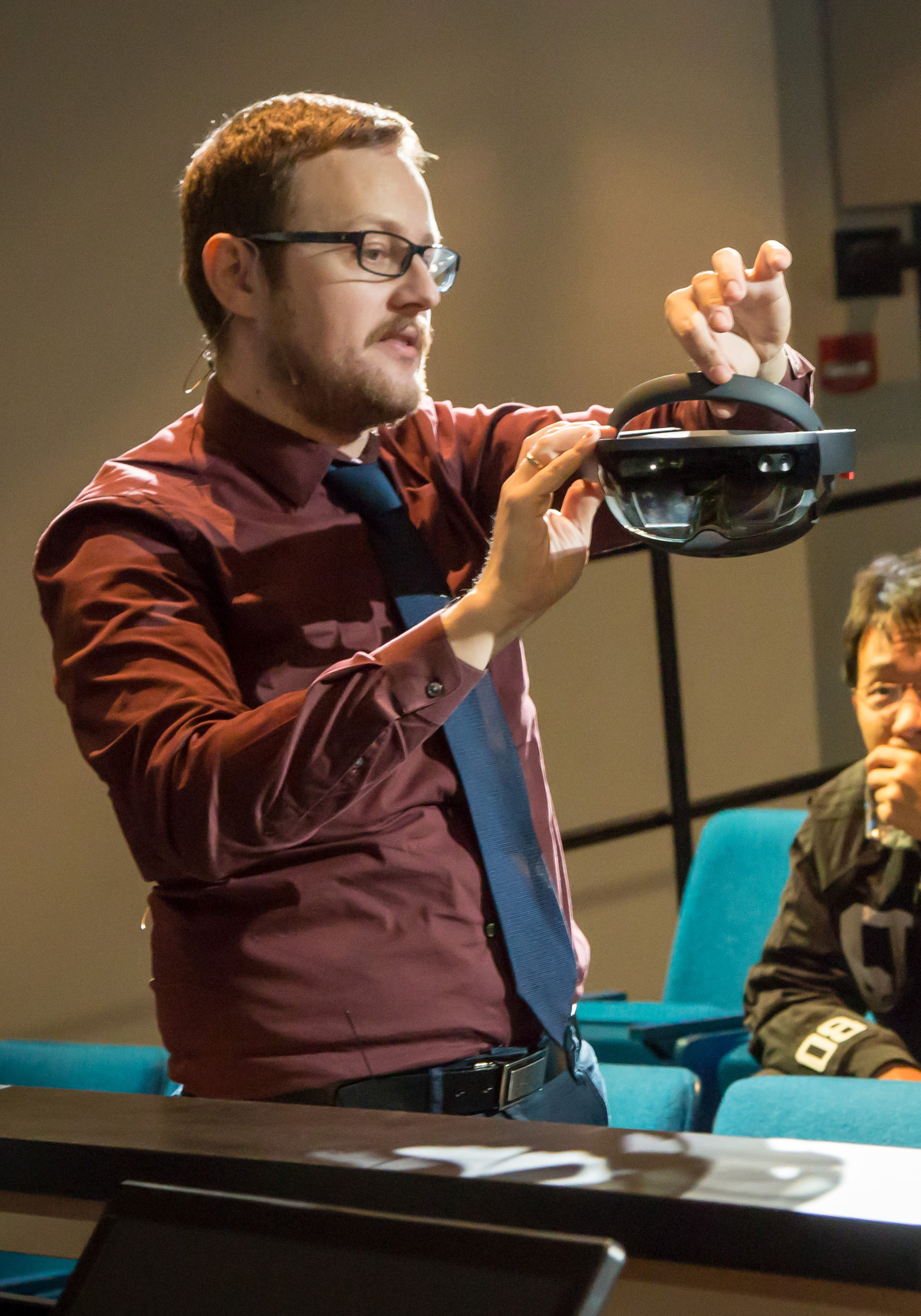
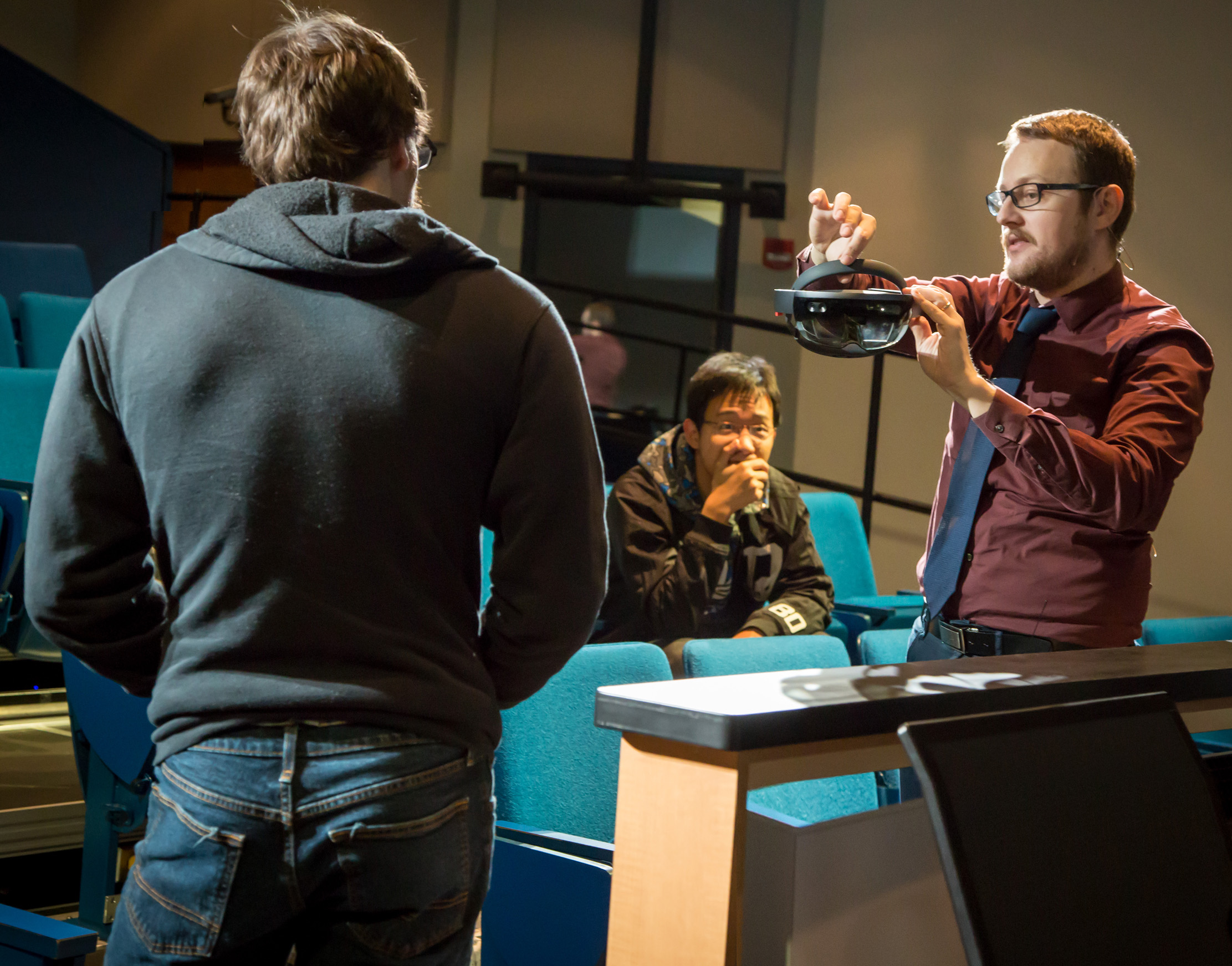
        Angelos Barmpoutis working with immersive technology in a collaborative research setting

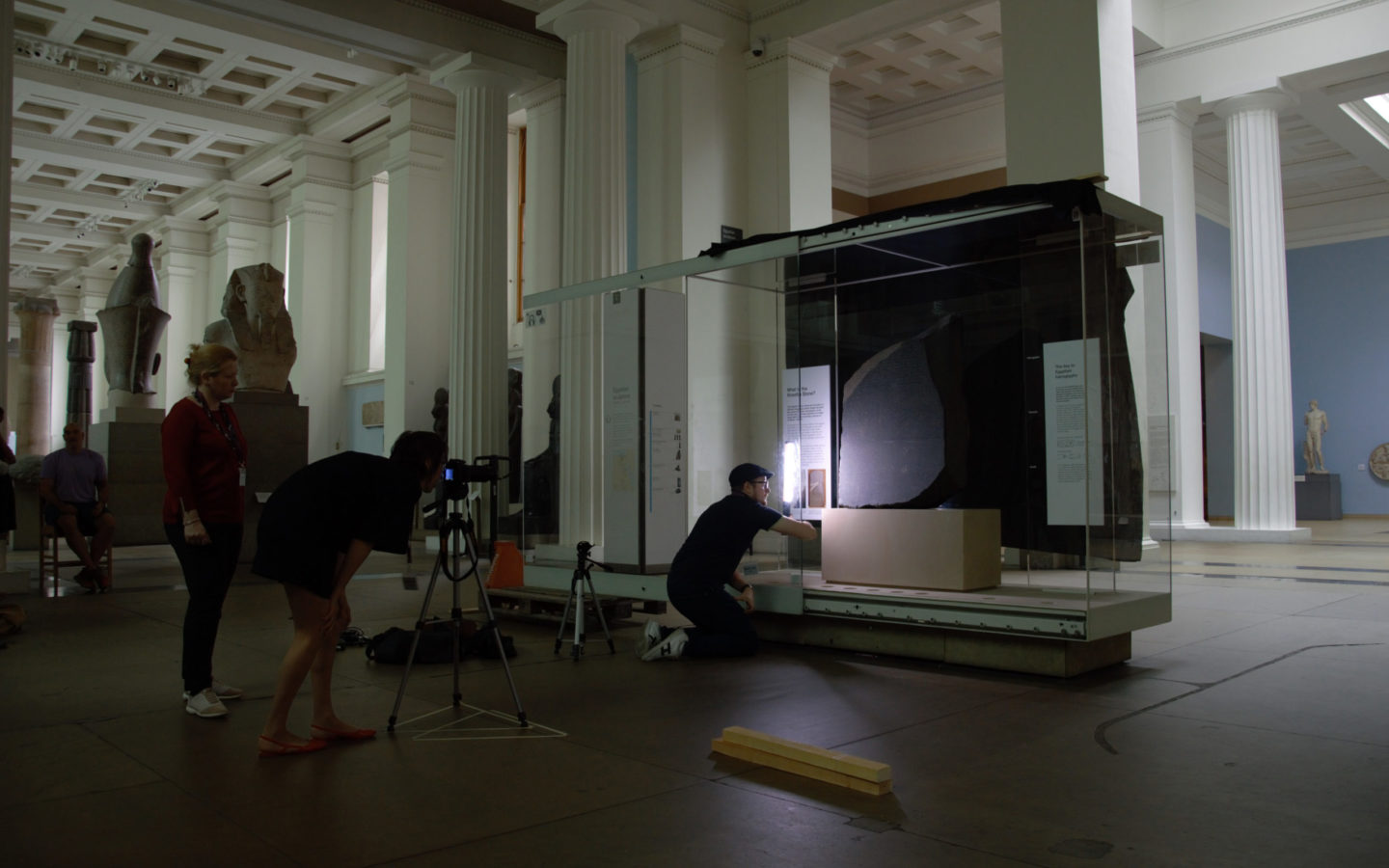
        Using a novel method to capture a high-resolution normal map of the Rosetta Stone for the 3D model of the museum.

        Rosetta Stone normal map texture used in digital epigraphy and material analysis

        Research practice

        Interdisciplinary creativity in action

        I approach each project as a design problem with social, cultural, and scientific dimensions.

        That interdisciplinary model shapes how I teach, mentor, and collaborate: I work across the arts, computer science, engineering, health, and humanities in order to produce research that is both technically robust and meaningfully engaged with the communities it serves.

        “Entertainment technologies, such as game engines, virtual reality, and motion tracking, can become powerful platforms for education, training, and scientific simulation, transforming technologies designed for play into tools for learning, discovery, and real-world problem solving.”

        I engage digital arts and science students in all of my research projects as a hands-on learning experience, where they work directly on practical problems and contribute to research in action. Our process begins with the physical world: we observe material surfaces, movement, light, and form, then translate those insights into digital models, immersive environments, and custom visual systems.

        Drag to rotate and pinch to zoom the 3D model

        Recognition

        Impact, funding & honors

        Selected external funding

        More than $8.9M in competitive funding from federal agencies, foundations, and industry.

          Selected awards & honors

            Tools

            Open-source & deployed software

            Software used by researchers and institutions including MIT, Cornell, UC Berkeley, Boston University, INRIA, UNC Chapel Hill, SRI International, and dozens of others worldwide.

              Teaching

              Courses

              I teach Digital Arts and Sciences students to design, build, test, and reflect critically on immersive systems as both creative artifacts and research instruments.

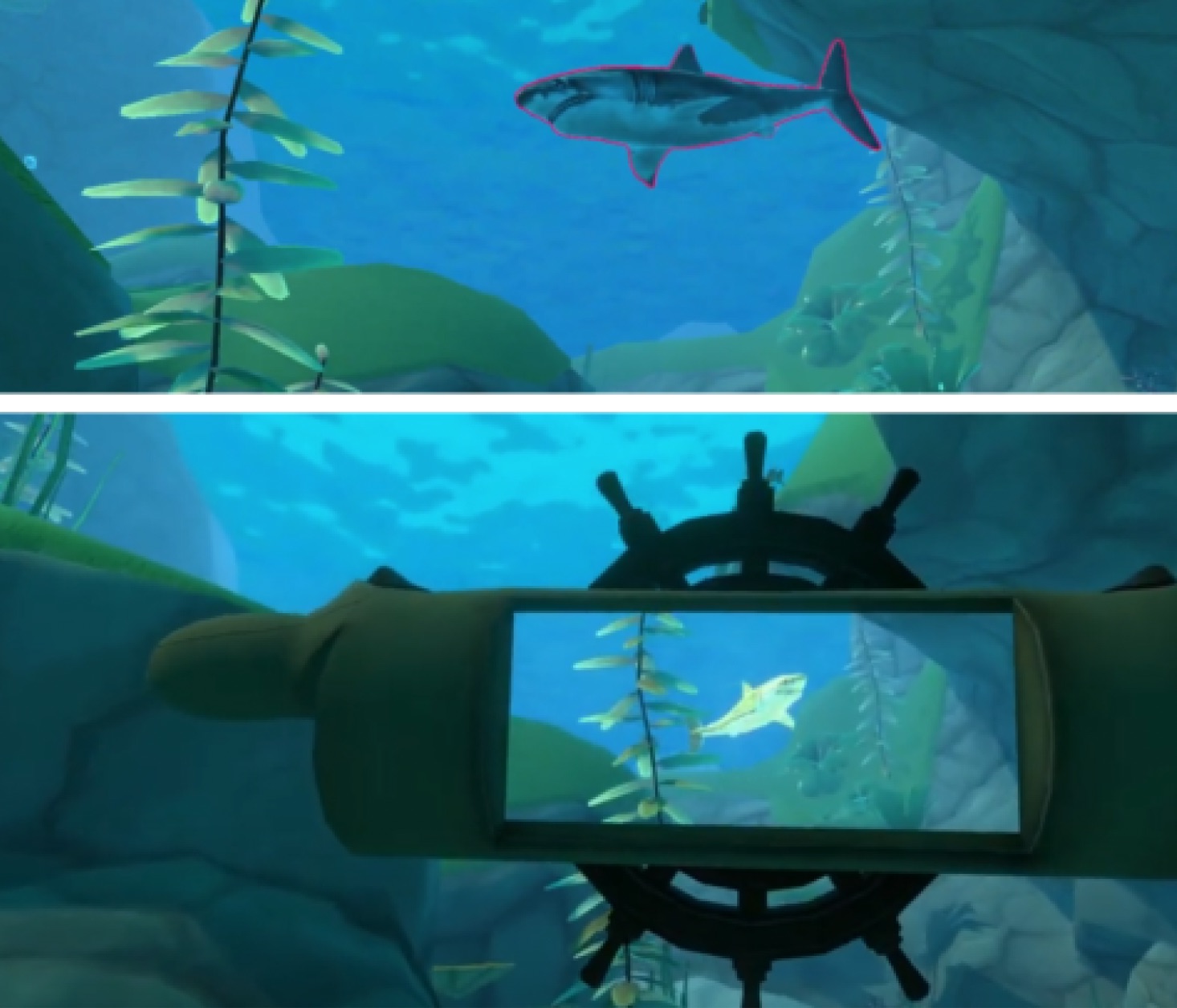
              3D rendering of a game engine scene with a shark underwater and a themed scuba diver camera.

              Undergraduate Course

              Game Engine Development

              This course asks students to build their own game engine rather than treat Unity or Unreal as a black box. They learn the architecture behind real-time rendering, shaders, scene graphs, input systems, resource management, and engine-level design decisions that shape how interactive experiences behave and feel.

              • Custom rendering pipeline and shader authoring
              • Camera, transforms, lighting, and scene structure
              • Game loop, input systems, and engine architecture
              A student testing and immersive and haptic interaction prototype in a research lab.

              Graduate Course

              Interdisciplinary Research Seminar

              In this seminar, students design novel immersive experiences in Virtual or Augmented Reality with haptic feedback, form a hypothesis, conduct a user study, evaluate results, and prepare work for international conference publication.

              • Hypothesis-driven design for immersive systems
              • Haptic interaction and user experience evaluation
              • Research methods and conference-ready dissemination
              3D rendering of a game engine scene with a shark underwater and a themed scuba diver camera.

              Graduate Course

              Entertainment Technology

              In this course students learn how digital media, real-time graphics, interactive systems, and emerging technologies can be combined to design engaging experiences for audiences across physical and virtual environments.

              • Interactive media, real-time graphics, and immersive technologies
              • Game engines, virtual and augmented reality, and interactive installations
              • Designing, prototyping, and evaluating novel user experiences
              3D rendering of a game engine scene with a shark underwater and a themed scuba diver camera.

              Graduate Course

              Movement, Media, and Machines

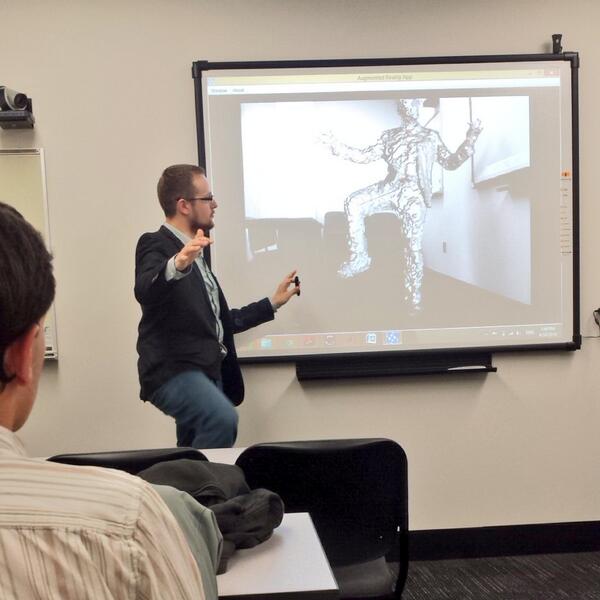
              In this course students work with live motion-tracking technologies, from infrared sensing systems to computer-vision and AI-based approaches, and learn how captured movement can drive virtual characters, interactive media, and immersive environments.

              • Infrared sensors and AI-based motion tracking
              • Avatar rigging and inverse kinematics
              • Authoring Unity plugins for real-time motion capture

              In addition to the above courses, I have also designed and taught: Interaction Design · Wearables and Mobile App Development · Production of Immersive Environments · Interactive Storytelling · Digital Arts and Science Design and Production Studio · Computer Programming for Artists.

              Student Work

              Creative work from the lab

              A selection of research artifacts and student-led immersive projects spanning XR, haptics, games, and other emerging technologies.

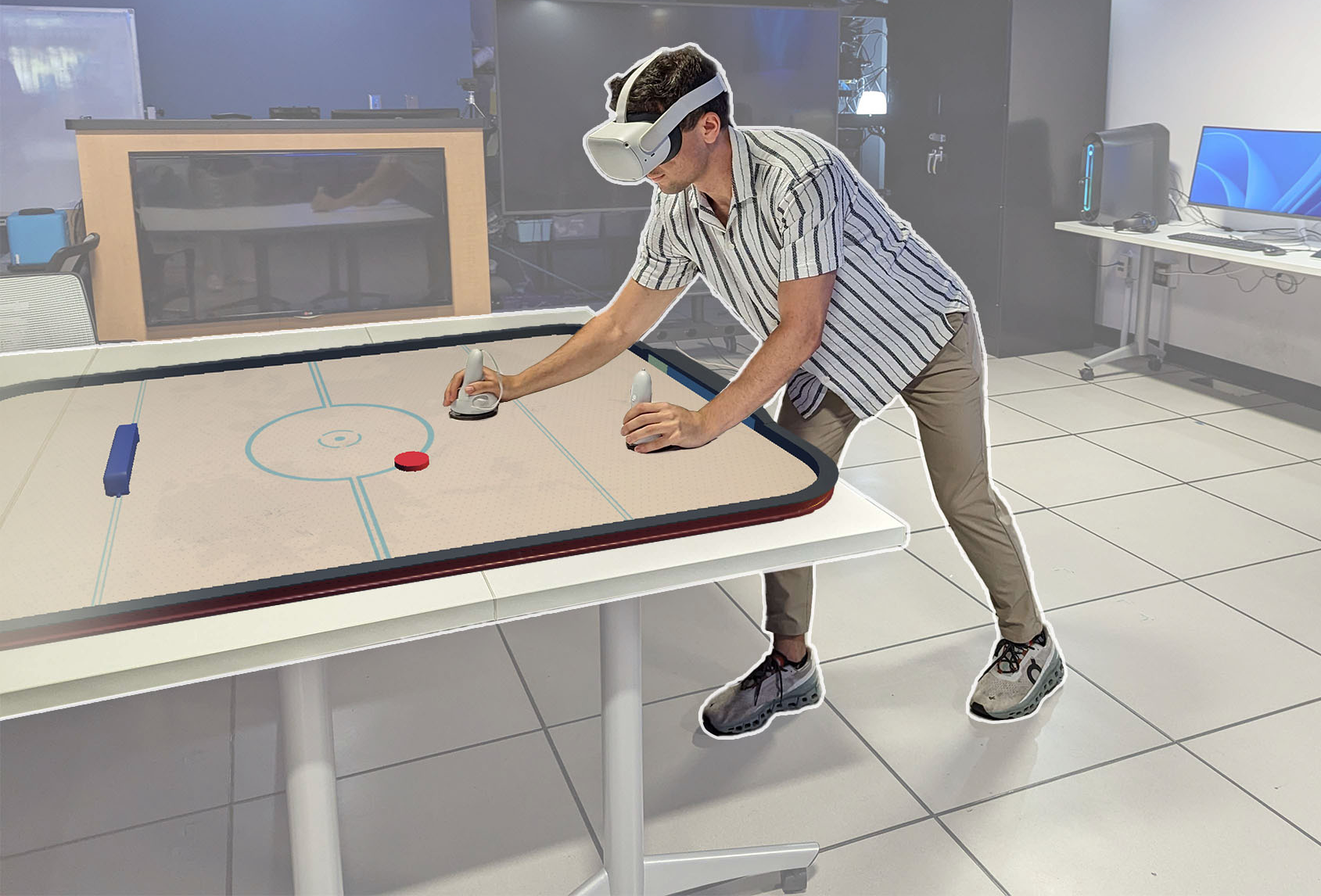
              Use of haptic feedback in educational contexts. VR Handbook
              Building kinesthetic learning games for elementary students. IEEE VR
              Virtual training simulation with passive haptics. VAMR
              Incorporating physicality into virtual experiences. HCII
              AI-driven Laban movement analysis. HCII
              Perception and haptics in VR.
              Designing custom wearable devices for haptic feedback. MMVR
              Movement recognition for dance and performance. ACM IMX
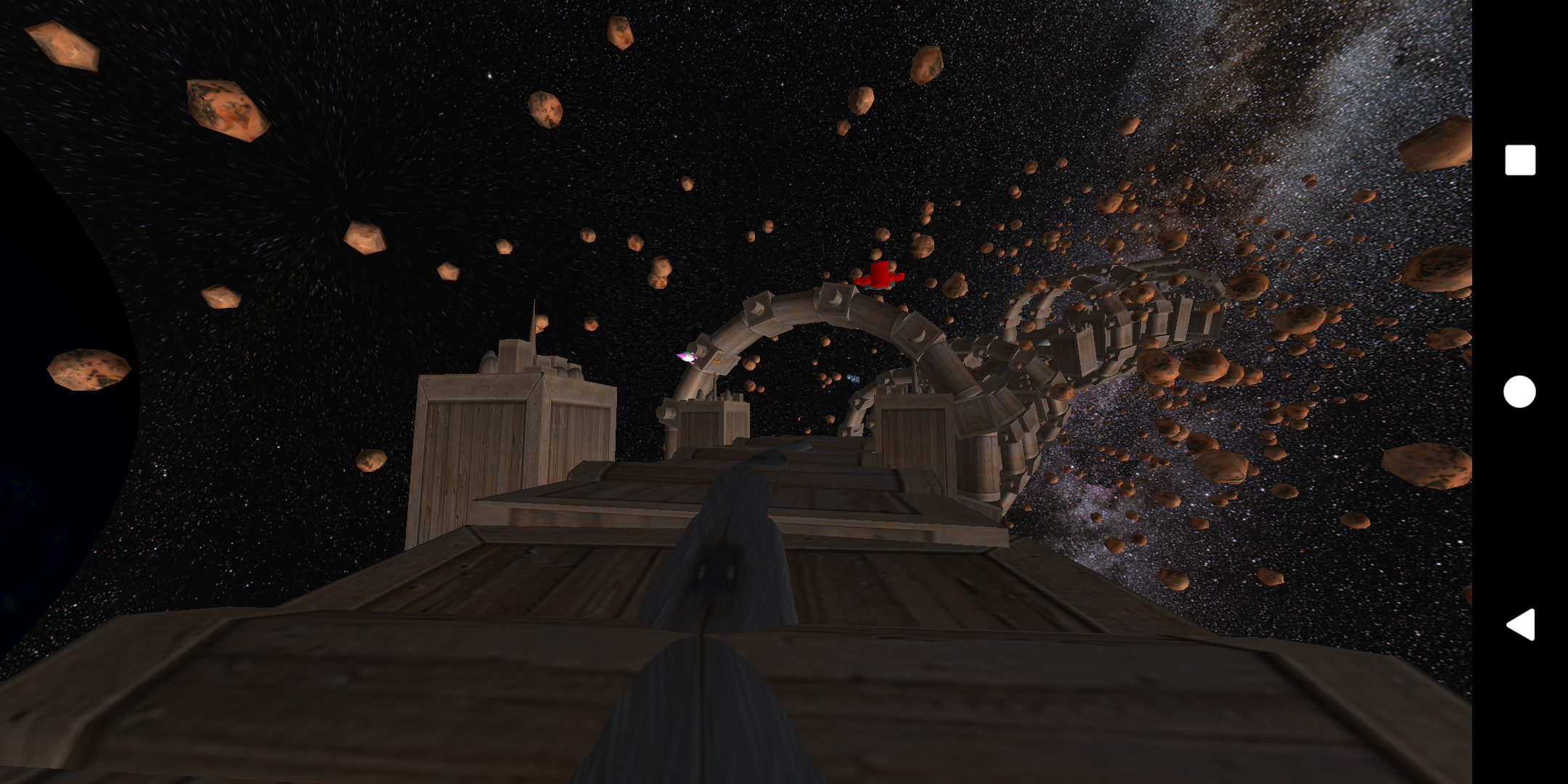
              Student-developed game engines with custom rendering pipeline.
              Infinte circular paths for continuous locomotion in VR. HCII 2026
              Immersive multi-sensory VR simulation of parachute training.
              Museum VR and public engagement. ACM IDC
              VR simulation for orchestra conductor training. VAMR
              Mixed reality games for physical therapy and rehabilitation. MICCAI
              Live performance with real-time motion capture.
              Integrating vertical climbing fitness machine with virtual reality.

              Student Mentorship

              • Served on 60 graduate student committees (Ph.D.: 17, M.A.: 44)
              • Mentor, Push4it, Office of Academic Affairs, 2022–2026
              • Mentor, AP Research Paper on Virtual Reality in Schools, Suncoast Community High School, 2022–2024
              • Advisor, First Lego League robotics team, Milwee Middle School, 2023
              • Mentor, University Scholars Program, 2016–2017, 2018–2019, 2023–2024
              • Mentor, Integrated Product and Process Design Program, 2014–2015, 2017–2018, 2018–2019, 2019–2020
              • Mentor, University Minority Mentor Program, 2015–2016

              My students have gone on to careers at

              • Electronic Arts
              • Activision Blizzard
              • Epic Games
              • Disney Entertainment Studios
              • Microsoft
              • Meta
              • Amazon
              • Lockheed Martin

              …and into academia and entrepreneurial ventures

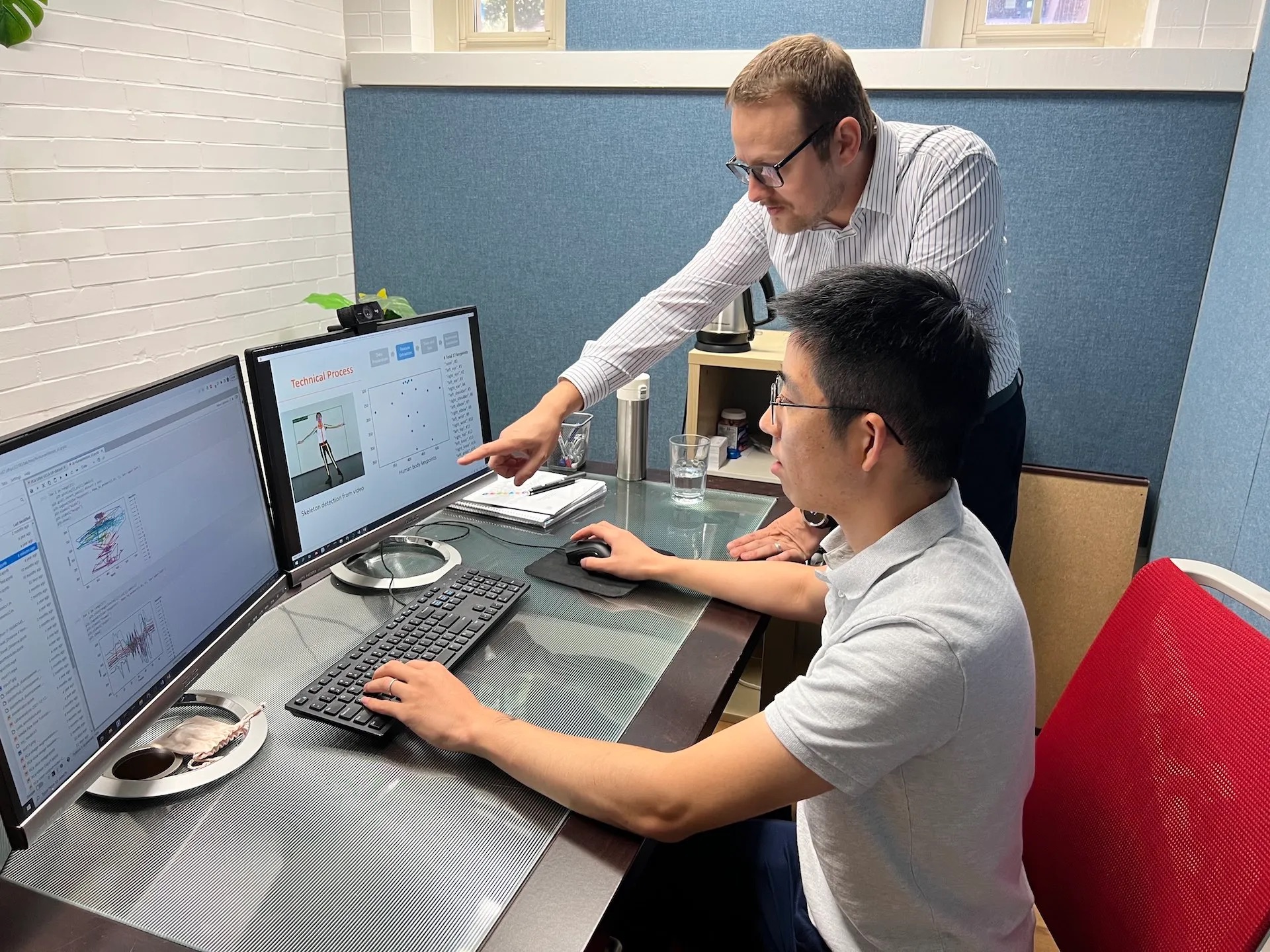
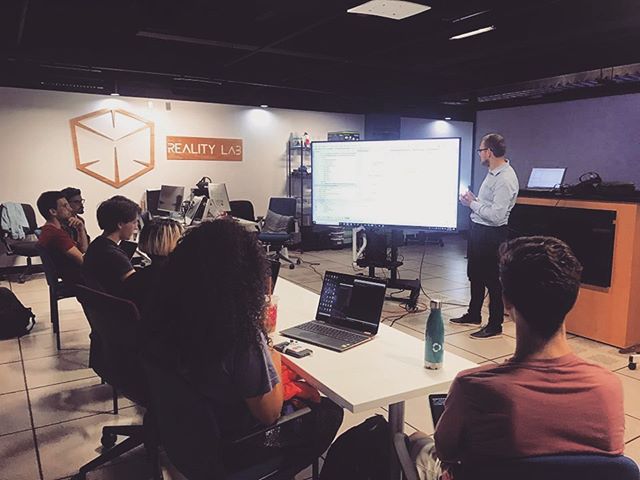
              Lab members collaborating with Dr. Barmpoutis during a mentorship session

              Service

              Service to the profession

              Sustained review, program-committee, and leadership contributions to the research community and to the profession.

              Journal & publisher reviewer

              Virtual Reality (Springer); CAD (Computer-Aided Design); CAMWA; CBM; CVIU; IEEE Trans. Cybernetics; Frontiers in Virtual Reality; IEEE Trans. Image Processing; IEEE Trans. Intelligent Transportation Systems; IEEE Trans. Pattern Analysis and Machine Intelligence; IJCARS; Information (MDPI); Intl J. Machine Learning and Cybernetics; iScience; JEMWA; JMLC; JMIV; MEDIA; Pattern Recognition; PNAS; Sensors (MDPI); SIIMS; Journal of Safety Science and Resilience; Elsevier (book proposals)

              Conference service

              • Program Board Member, International Conference on Virtual, Augmented, and Mixed Reality, 2025, 2026, 2027
              • Session Chair, “Enhancing User Perception, Presence, and Comfort in VR,” HCII, Washington D.C., 2024
              • Program Board Member, HCI International Conference, 2023, 2024
              • External grant reviewer, Czech Science Foundation, 2021
              • Session Chair, “New Virtualities IV,” HCII, Copenhagen, 2020
              • Session Chair, HFES III, AHFE, Los Angeles, 2017
              • Session Chair, “Developing Novel Virtual Environments,” HCII, Vancouver, 2017
              • Chair, Organizing Committee, Drivers’ Motion Depth Database Track, 3D Shape Retrieval Contest, 2015
              • Program Committee, International Conference on Computer Vision Theory and Applications, 2015, 2017, 2025

              University service (selected)

              • Chair, Interactive and Emerging Media curricular area (2024–present)
              • Member, AI and the Arts Working Group, College of the Arts (2022–present)
              • Member, Tenure and Promotion Committee, College of the Arts (2023–present)
              • Member, Search Committee for Director of the Digital Worlds Institute (2025)
              • Member, Search Committee for Dean of the College of the Arts (2024–2025)
              • Member, UF Data Science Committee (2022–2023)
              • Chair, University Library Committee (2020–2021); Co-Chair (2018–2020)
              • Member, UF AI Research Working Group (2020–2021)
              • Chair, Faculty Search Committee, Assistant/Associate Professor, Digital Arts and Sciences
              • Chair, search committees for Interactive Media Programmer and Interaction Designer
              • Coordinator of Research and Technology, Digital Worlds Institute (2010–present)
              • Member, graduate admissions committee, Digital Worlds Institute (2011–present)
              Portrait of Angelos Barmpoutis

              Angelos Barmpoutis
              Chair, Interactive & Emerging Media
              Digital Worlds Institute

              Leadership

              Service and Academic Leadership

              I view service as an opportunity to build institutions that empower others to succeed. Effective academic leadership extends beyond committee participation; it involves creating environments where interdisciplinary collaboration flourishes, innovative programs emerge, and faculty and students are supported in achieving their highest potential.

              Throughout my career, I have embraced leadership responsibilities that have shaped both my institution and my discipline. As one of the founding faculty members of the Digital Worlds Institute, I contributed extensively to strategic planning, curriculum development, faculty recruitment (chairing 5 faculty search committees and serving on 10 others), graduate education (serving in more than 60 graduate committees), and the growth of interdisciplinary academic programs. As Chair of the Interactive and Emerging Media curricular area, I have successfully mentored junior faculty through the tenure process, coordinated faculty collaborations, guided curricular innovation, and helped position our programs for continued growth.

              My commitment to service extends well beyond the university. I have organized international conferences and workshops, served on conference program committees, reviewed manuscripts for leading journals and funding agencies, mentored junior faculty, and participated in university-wide initiatives promoting interdisciplinary research. I also founded the Collision Event series in 2026, bringing together artists, engineers, scientists, and designers to stimulate new collaborations across disciplinary boundaries.

              Technical Proficiency

              Software and programming languages

              Expert-level proficiency across creative software, engineering tools, and programming languages used in research, production, and teaching.

              • UnityExpert
              • UnrealExpert
              • BlenderExpert
              • Android StudioExpert
              • JavaScriptExpert
              • JavaExpert
              • PythonExpert
              • OpenGL ES3Expert
              • GLSLExpert
              • CExpert
              • C++Expert
              • C#Expert
              • ShellExpert
              • MATLABExpert
              • PHPExpert
              • SQLExpert
              • HTML5Expert
              • CSSExpert
              • XSLTExpert
              • AWSExpert

              Get in touch

              Let’s collaborate

              Open to conversations about interdisciplinary research, graduate mentorship, speaking engagements, and creative-technology partnerships.